

What Are Retroactive Widow Benefits?
Retroactive widow (or widower) benefits are Social Security survivor benefits paid for months before you officially apply, if you were eligible during that time.
In certain situations, Social Security allows survivor benefits to be backdated, resulting in a lump-sum payment when you file.
However, retroactive benefits are not automatic — and they’re not always the best option.
Who Is Eligible for Retroactive Widow Benefits?
You may be eligible for retroactive survivor benefits if:
- You qualify for widow or widower benefits
- You are past Full Retirement Age for survivor benefits
- You delayed filing and later request retroactive treatment
According to the Social Security Administration, survivor benefits have different rules than retirement benefits, which is why widows and widowers often have more claiming flexibility.
How Far Back Can Widow Benefits Be Paid Retroactively?
In many cases, survivor benefits can be paid retroactively for up to six months.
However:
- Benefits cannot be paid for months before you were eligible
- Retroactive payments may reduce future monthly benefits depending on timing
- Filing age still plays an important role in the outcome
Because these rules interact with your broader Social Security strategy, it’s important not to focus on retroactive benefits in isolation.
When Retroactive Widow Benefits May Make Sense
There are situations where retroactive survivor benefits can be helpful, such as:
- You delayed filing unintentionally and want to correct the timing
- You need short-term cash flow during a transition period
- You’re coordinating survivor benefits with other income sources
For some widows and widowers, retroactive benefits can provide flexibility — but only if the long-term trade-offs are understood.
When Retroactive Widow Benefits Can Reduce Long-Term Income
This is where caution is needed.
Accepting retroactive survivor benefits may:
- Reduce the monthly benefit going forward
- Limit future claiming strategies
- Affect the timing of switching to your own retirement benefit
In some cases, taking retroactive benefits can lock in a lower lifetime income, even if the upfront payment feels helpful.
How Survivor Benefits Fit Into a Larger Social Security Strategy
One of the most valuable aspects of survivor benefits is choice.
Many widows and widowers can:
- Claim survivor benefits first
- Allow their own retirement benefit to grow
- Switch benefits later for higher lifetime income
But retroactive payments can complicate this strategy if they’re not evaluated carefully.
This is why survivor benefits are best coordinated as part of a long-term retirement and tax plan, not just a single filing decision.
How Taxes Can Impact Retroactive Widow Benefits
Retroactive Social Security payments are generally taxable in the year received, even if they apply to prior months.
That can:
- Increase taxable income unexpectedly
- Affect Medicare premiums (IRMAA)
- Create a larger tax bill than anticipated
For widows and widowers already dealing with change, tax surprises are the last thing you want.
👉 [Taxes in Retirement: What Retirees Need to Know About Keeping More of Their Income]
How This Differs From Other Retroactive Social Security Benefits
Survivor benefits follow different rules than standard retirement benefits.
For a broader explanation of how retroactive benefits work overall, see our main guide:
👉 [Retroactive Social Security Benefits: What You Need to Know Before You File]
And if you’re wondering how retroactive benefits may show up in your first payment, we explain that here:
👉 [Does Your First Social Security Check Include Retroactive Benefits?]
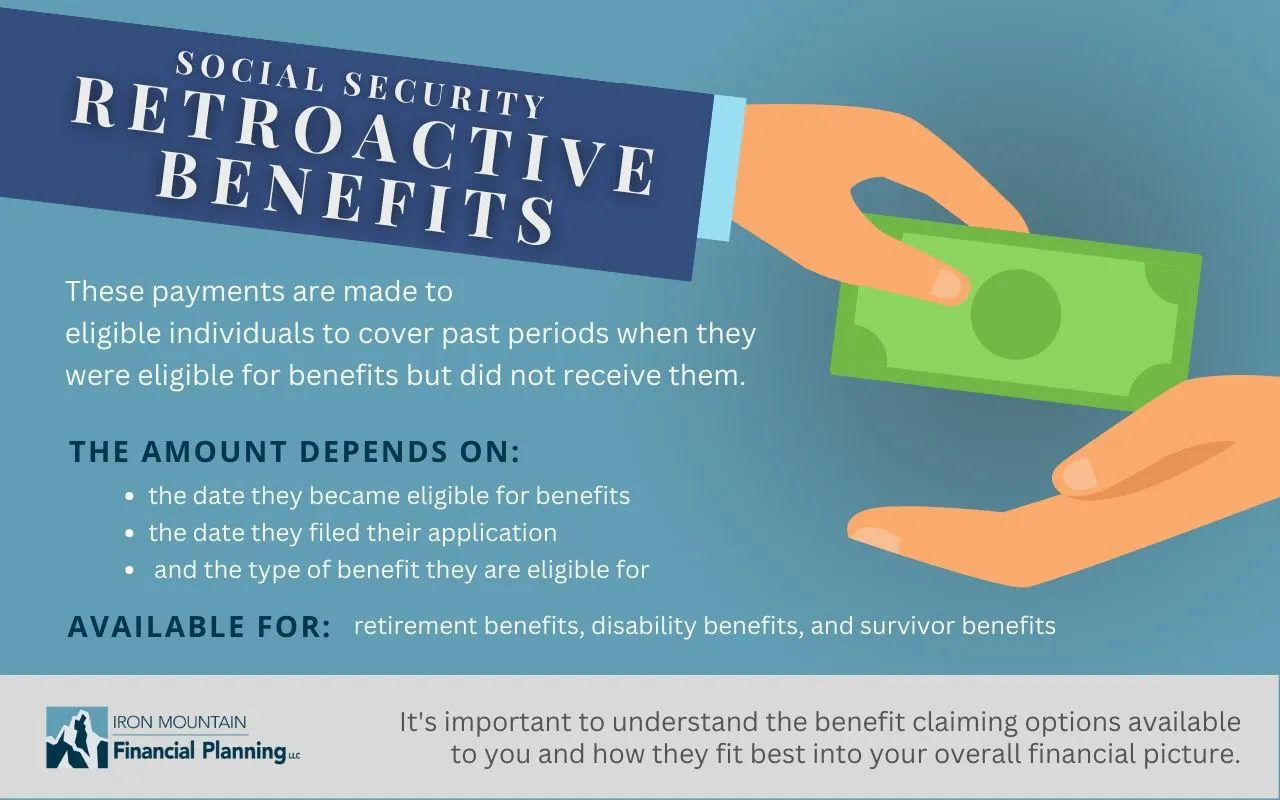
Why These Decisions Deserve Careful Planning
Social Security decisions for widows and widowers are permanent — and often made during emotionally difficult times.
At Iron Mountain Financial Planning, we help clients evaluate survivor benefits as part of a tax-efficient retirement strategy, so decisions made today don’t unintentionally limit future options.
Next Steps If You’re Considering Widow Benefits
If you’re approaching a Social Security claiming decision — or wondering whether you missed something — clarity matters.
You don’t have to navigate this alone.
👉 [Schedule Your Intro Call] – We’ll help you understand your options and make confident, informed decisions — without pressure or product sales.
Fee-Only, Fiduciary Guidance You Can Trust
As a Fee-Only fiduciary, our role is simple: to provide advice that puts your interests first. We do not work for commissions or rush your decisions. We are here to give you clear guidance when it matters most.